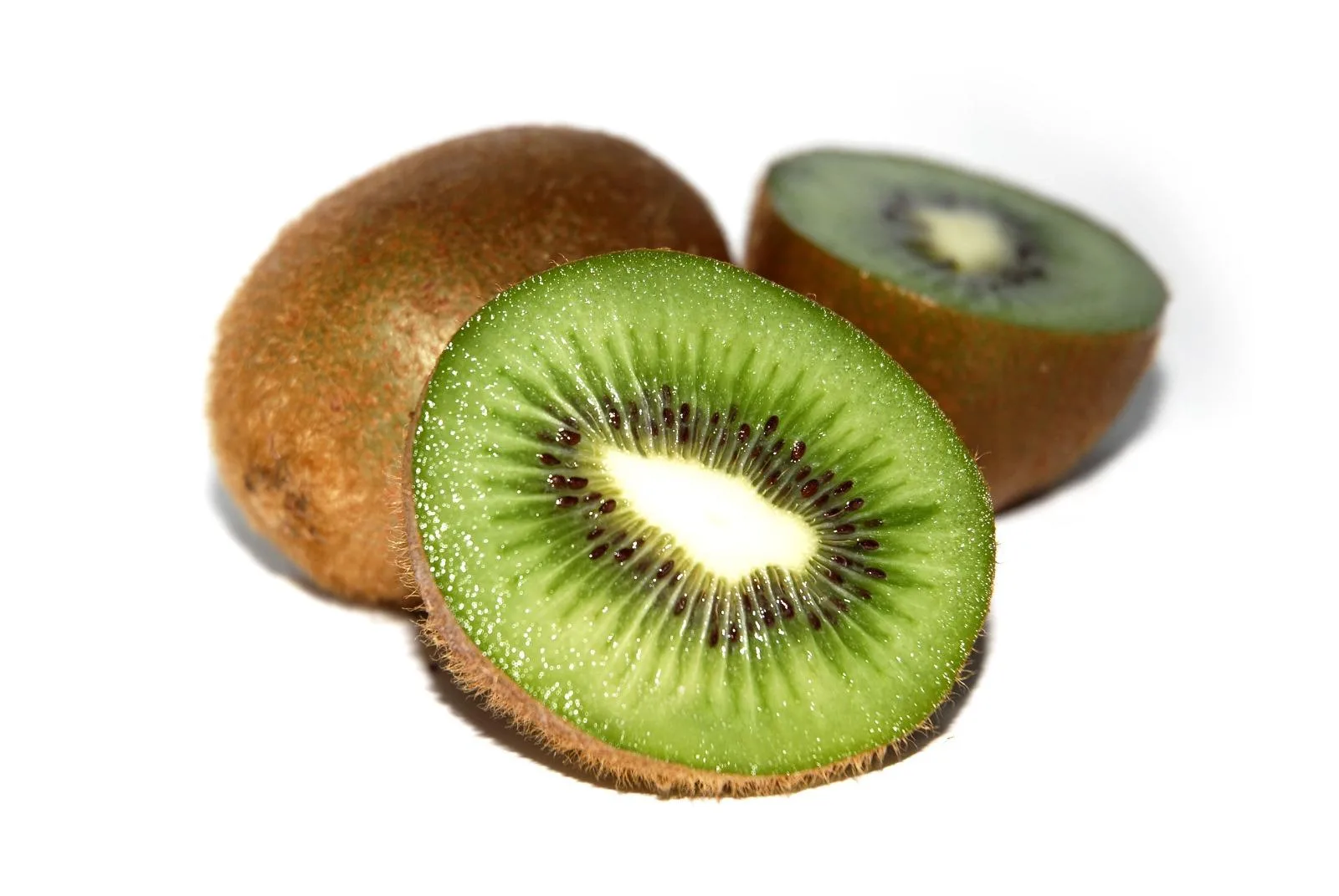
From the Far East to European markets
From the Chinese Yang Tao to the New Zealand kiwi: a centuries-long journey that ended in the fields of south-west France.
The kiwi originates from southern China, where it was known as the 'Chinese gooseberry' (Yang Tao). For centuries it was consumed locally as a wild fruit, until missionary teachers brought seeds to New Zealand in the early 20th century. Farmer Hayward Wright then developed the commercial variety we know worldwide today.
The name 'kiwi' was adopted in New Zealand in the 1950s, inspired by the country's national bird. Mass exports began in the 1960s. Today, France is one of Europe's largest kiwi producers, particularly in the south-west and the French Basque Country, where the mild, humid climate is ideal for its cultivation.
Kiwi contains twice as much vitamin C as an orange. A single kiwi covers 100% of the recommended daily intake for an adult.
Kiwi skin is fully edible and packed with fibre. Just rub it lightly to remove the surface fuzz.
Kiwi contains an enzyme called actinidin that breaks down proteins. That's why it's used as a natural meat tenderiser in many Asian cuisines.

01
Ingredients
Whisk egg whites to stiff peaks; add sugar gradually, whisking continuously. Fold in cornflour and vinegar. Shape a 22 cm disc on baking paper and bake 1h 15min at 120 °C. Cool in the oven with door ajar. Top with sweetened whipped cream and decorate with sliced kiwi and mixed berries.

02
Ingredients
Peel and roughly chop the kiwis and banana. Add all ingredients to the blender and blend for 1 minute until completely smooth. Serve immediately over crushed ice with a slice of kiwi as garnish.

03
Ingredients
Peel and dice the kiwis and avocados into 1.5 cm cubes. Finely chop the red onion and coriander. Mix gently to avoid breaking the avocado. Dress with lemon juice, olive oil, salt and pepper. Serve immediately to preserve the colour of the avocado.
Get in touch and we'll tell you about availability and terms for our fresh kiwis.
Contact us